High Quality OEM/ODM LED Strip Manufacturer
High Quality OEM/ODM LED Strip Manufacturer
Published: November 8, 2022 Updated: August 1, 2024 1286
Most low-voltage LED strips do not need a separate rectifier if they are connected to the correct AC-to-DC power supply. The driver already converts mains AC into the regulated 12 V or 24 V DC required by the strip. Never connect a low-voltage strip directly to mains electricity.
An LED is a diode and conducts in one direction. Flexible low-voltage strips are designed for DC input and are marked with positive and negative pads. Reversing polarity normally prevents operation; excessive or mains voltage can permanently damage the strip and create a serious safety risk.
For a 12 V strip, use a regulated 12 V DC constant-voltage supply. For a 24 V strip, use a regulated 24 V DC supply. Calculate the connected wattage, allow the manufacturer's headroom and confirm that dimmers or controllers share the same voltage.
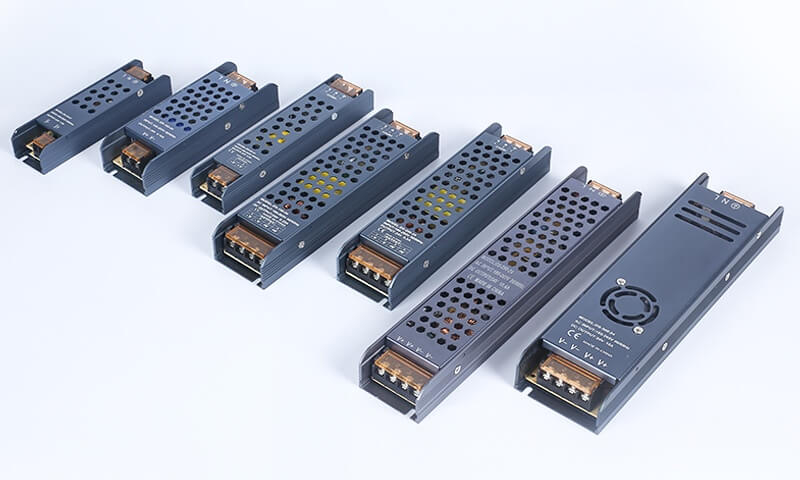
Example: ten metres rated at 9.6 W/m create a nominal 96 W load. A supply should not be selected at exactly 96 W; follow the driver's derating guidance and account for installation temperature. See our power-supply sizing guide for a complete calculation.
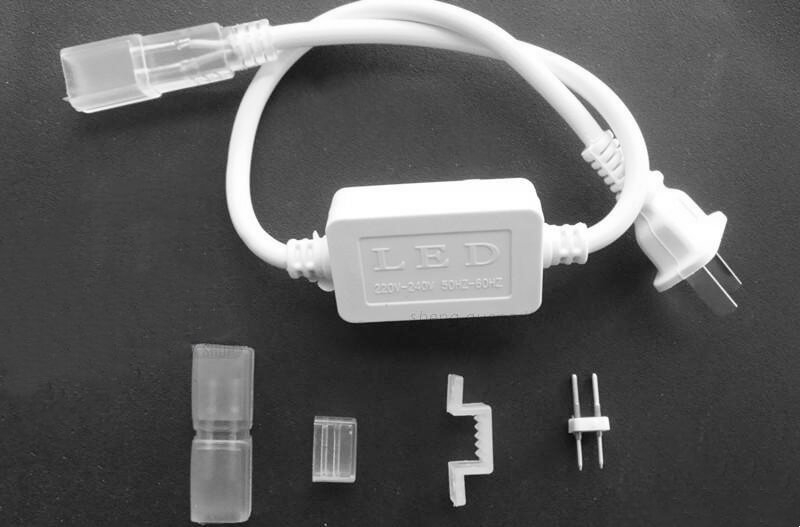
Some 110 V or 220–240 V strips use a dedicated rectifier lead or molded power connector supplied for that product. This is not interchangeable with a low-voltage driver. The connector, strip voltage, cutting interval, end cap and waterproof sealing method must all match the manufacturer's specification.
Mains-voltage strip should be installed only where permitted by local electrical rules and by a qualified person. Do not improvise a bridge rectifier or reuse a connector from another strip model.
If the project includes long cable runs or large connected loads, compare 12 V and 24 V LED strip options before finalizing the system.
Only through the power device specified for that strip. A low-voltage strip must never be wired directly to the outlet.
Not exactly. A driver or power supply may include rectification plus voltage regulation and protection. Those additional functions are important for stable operation.
The output may be poorly smoothed, incorrectly rated or incompatible with the controller. Use the strip manufacturer's specified power solution and verify the load.
Need professional help? Contact our team for expert support and personalized solutions. We’re here to assist you. Contact Us



Mobile:+86 18923408595
Email:info@zbl-lighting.com
Zip Code: 518106
Xin Wei Forth industrical Zone,Gong Ming Town,Guangming New Area,Shen Zhen,Guangdong,China