Choosing the right LED strip driver size involves several key factors, including the strip’s voltage, current requirements, power, and the installation environment. Here is a detailed guide to help you select the appropriate LED strip driver:
-
Determine the Voltage of the LED Strip:
- Common LED strip voltages are 12V and 24V. The voltage of the strip should match the output voltage of the driver.
-
Calculate the Total Power:
- First, determine the power per meter of the LED strip (usually specified in watts per meter).
- Then calculate the total power: Total Power = Power per Meter × Total Length of the Strip.
- For example, if the LED strip uses 5 watts per meter and the total length is 10 meters, the total power is 5 watts/meter × 10 meters = 50 watts.
-
Consider the Current Requirement:
- Calculate the current requirement based on total power and voltage: Current = Total Power / Voltage.
- For example, if the total power is 50 watts and the voltage is 12V, the current requirement is 50 watts / 12V = 4.17 amps.
-
Select the Driver Power:
- The driver’s power should be slightly higher than the total power of the LED strip. It’s recommended to have a 20-30% buffer to ensure stability and longevity.
- For instance, if the total power is 50 watts, choose a driver that can handle at least 60 watts.
-
Check the Current Capacity:
- Ensure the driver’s output current meets or exceeds the calculated current requirement.
- For example, if the LED strip requires 4.17 amps, the driver’s output current should be at least 4.5 amps or higher.
-
Environment and Heat Dissipation:
- If the driver will be installed in a high-temperature environment or a confined space, choose a driver with good heat dissipation features.
- The protection rating (e.g., IP65) is important, especially for use in humid or outdoor environments.
-
Additional Features:
- If you need dimming functionality, ensure the driver supports the dimming method you plan to use (e.g., PWM dimming, 0-10V dimming).
- Check if the driver has overloading protection, over-voltage protection, and short-circuit protection to enhance safety and reliability.
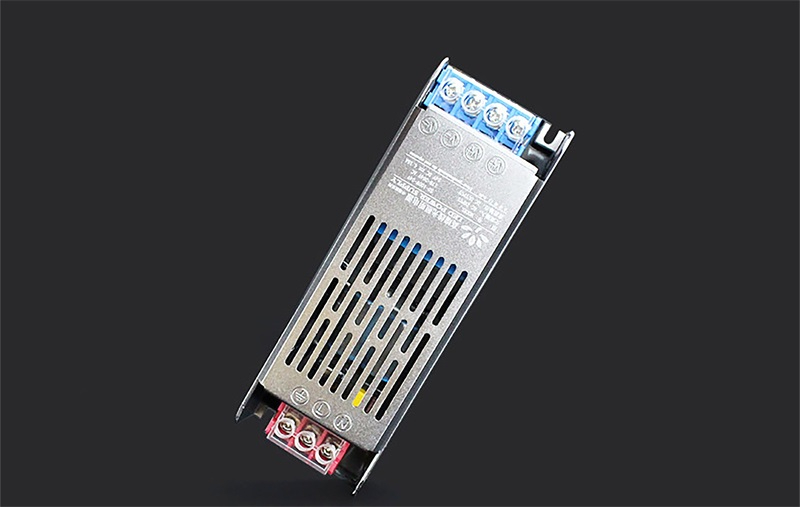
Example Calculation:
Suppose you have a 12V LED strip, total length of 10 meters, and power per meter is 5 watts:
- Determine LED Strip Voltage: 12V
- Calculate Total Power: 5 watts/meter × 10 meters = 50 watts
- Calculate Current Requirement: 50 watts / 12V = 4.17 amps
- Select Driver Power: Choose at least a 60-watt driver
- Check Current Capacity: Driver output current should be at least 4.5 amps
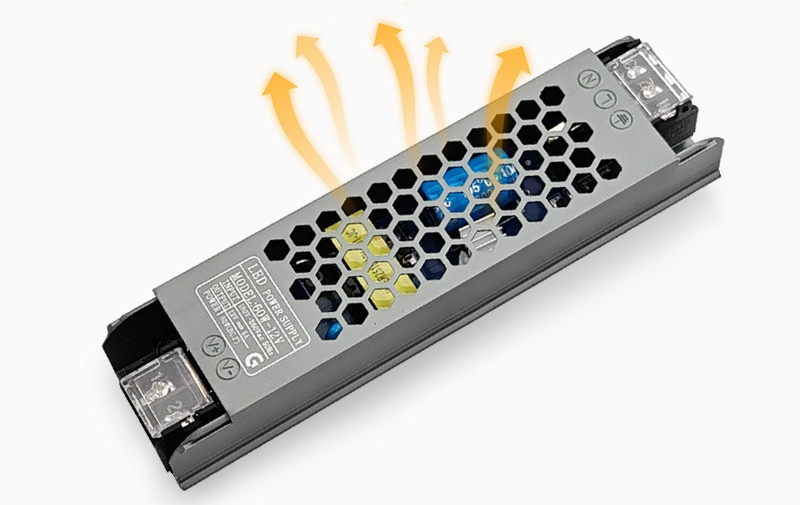
Recommended Driver Specifications:
- Output Voltage: 12V
- Output Power: At least 60 watts
- Output Current: At least 4.5 amps
- Protection Features: Overload protection, over-voltage protection, short-circuit protection
- Environmental Considerations: Appropriate protection rating (e.g., IP65) and heat dissipation based on the installation environment
By following these steps, you can select a suitable LED strip driver, ensuring it operates safely and reliably.