High Quality OEM/ODM LED Strip Manufacturer
High Quality OEM/ODM LED Strip Manufacturer
Published: June 26, 2025 1622
Outdoor lighting has become an essential part of modern landscape design, architecture, and home improvement. Among the many lighting options available, LED strip lights are popular for their flexibility, brightness, and energy efficiency. However, one common question arises when planning outdoor lighting projects:
Should you use high-voltage or low-voltage LED strip lights?
This article provides a professional breakdown to help you make the right choice based on safety, performance, ease of installation, and long-term reliability.
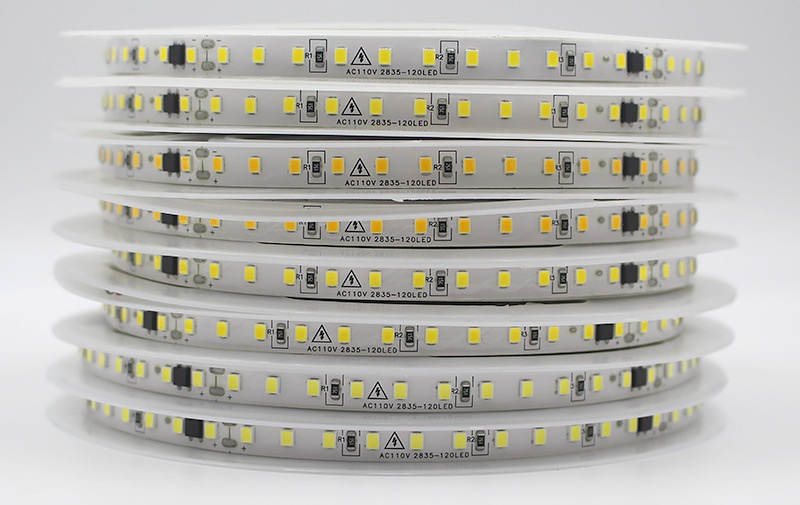
High-voltage LED strip lights typically operate directly from the AC mains supply—either 110V or 220V, depending on your region. These strips often come with built-in rectifiers and are designed to connect directly to household or commercial power sources without an external transformer.
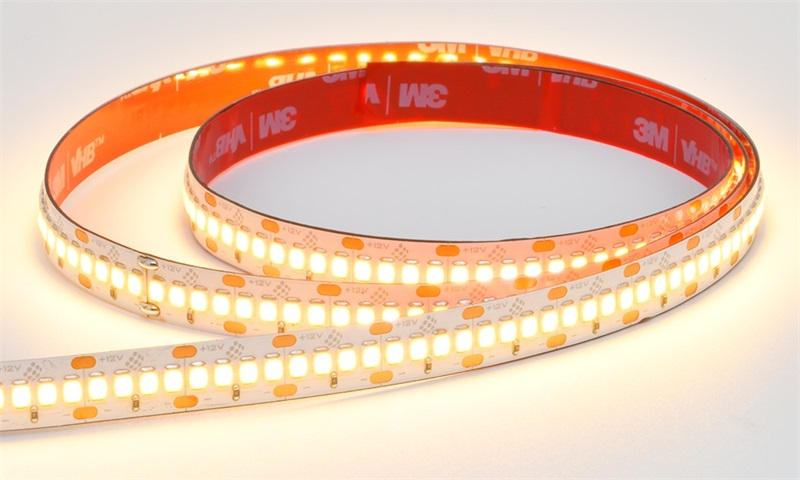
Low-voltage LED strip lights, on the other hand, run on 5V, 12V, or 24V DC power. They require a compatible power supply (or driver) to step down the voltage from the mains. These strips are generally safer and more flexible in terms of lighting effects and control.
When it comes to outdoor installations, safety should always come first.
Low-voltage strips are much safer for environments where people or pets might come into contact with the lighting—such as garden paths, patios, handrails, or near water features. Because they operate below 30V DC, they pose minimal risk of electric shock.
High-voltage strips, while convenient, carry a higher risk if not installed properly. Any damage to the insulation or waterproofing could result in serious electric hazards. Professional installation and proper protection (like waterproof junction boxes and ground fault circuit interrupters) are strongly recommended.
High-voltage strips have one clear advantage: they can power long runs—often 30 to 100 meters—without suffering noticeable voltage drop or requiring additional power boosters. This makes them ideal for large-scale installations, such as outlining buildings or fences.
Low-voltage strips, especially at 12V, are more sensitive to voltage drop over long distances. Typically, they are limited to 5–10 meters per power feed. However, this can be managed with power injection, thicker gauge wiring, or using 24V systems for longer runs.
If you're looking to add dynamic lighting effects—such as color changes, dimming, or smart home integration—low-voltage LED strips are the better option. Many smart controllers, such as those compatible with Wi-Fi, Zigbee, or DMX, are designed specifically for 12V or 24V LED systems.
High-voltage LED strips are often limited to static colors or basic dimming. Fine-grained control (e.g., addressing individual LEDs) is typically not supported in high-voltage systems.
Both high-voltage and low-voltage LED strips can be made waterproof (rated IP65 or higher), which is essential for outdoor use. However, there are some long-term considerations:
High-voltage strips may be more vulnerable to heat buildup and voltage fluctuations. If the internal circuitry is not well designed, it could shorten the strip’s lifespan.
Low-voltage strips tend to run cooler and are often more reliable over time, especially in climates with extreme temperatures or frequent moisture exposure.
Long-distance installations (30m+)
Budget-conscious, simple lighting projects
Areas where physical access is restricted or protected
Temporary or seasonal displays (e.g., holiday lighting)
Permanent residential or landscape lighting
Smart lighting systems and color-changing effects
Areas with direct human contact (patios, decks, handrails)
Projects requiring long-term reliability and easy maintenance
There’s no one-size-fits-all answer. The best choice between high-voltage and low-voltage LED strip lights depends on the application, safety requirements, installation environment, and your control needs.
If you prioritize ease of setup and long runs, high-voltage strips may be suitable—but only with proper safety precautions. If your project demands safe, customizable, and intelligent lighting, low-voltage strips are likely the better investment.
Before making a purchase, consider consulting a lighting professional to ensure that your chosen setup complies with local electrical codes and delivers the results you're looking for—both in appearance and performance.
Need professional help? Contact our team for expert support and personalized solutions. We’re here to assist you. Contact Us



Mobile:+86 18923408595
Email:info@zbl-lighting.com
Zip Code: 518106
Xin Wei Forth industrical Zone,Gong Ming Town,Guangming New Area,Shen Zhen,Guangdong,China