High Quality OEM/ODM LED Strip Manufacturer

High Quality OEM/ODM LED Strip Manufacturer
July 29, 2024 1427
Choosing the right power supply for your LED strip lights involves considering the total power consumption of the strips and ensuring the power supply can handle the load. Here's a simple guide to help you select the correct power supply wattage:
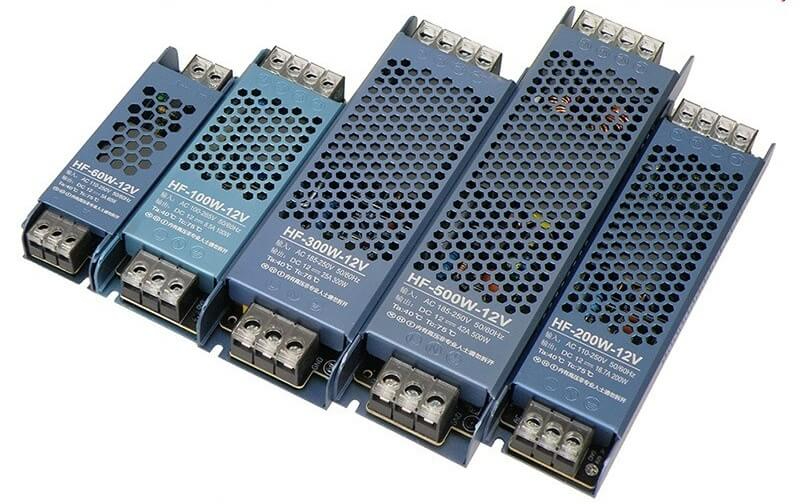
Choosing the correct power supply is one of the most important steps when installing LED strip lights. Many common problems—such as flickering, uneven brightness, or shortened lifespan—are not caused by the LED strip itself, but by an improperly selected power supply.
This guide explains how to match an LED strip with the right power supply in a clear and practical way, even if you have no technical background.
LED strip lights are low-voltage products. They cannot be connected directly to mains electricity without a power supply. The power supply converts AC power into a stable DC output that the LED strip can safely use.
A suitable power supply does more than simply turn the lights on. It ensures stable voltage, sufficient current, and long-term reliability. For this reason, selecting the right power supply is just as important as choosing the LED strip itself.
The first and most critical step is identifying the operating voltage of the LED strip. The most common options on the market are 12V and 24V, although some LED strips are designed for direct 220V or 110V connection with built-in drivers.
When using low-voltage LED strips, the power supply voltage must exactly match the strip voltage. A 12V LED strip must be connected to a 12V power supply, and a 24V strip must be connected to a 24V power supply. Using the wrong voltage can result in insufficient brightness or permanent damage to the strip.
Voltage information is usually printed on the LED strip, packaging, or product specification sheet.
After confirming the voltage, the next step is calculating how much power the LED strip will consume. LED strip power is typically specified as watts per meter.
To calculate the total power requirement, multiply the power per meter by the total length of LED strip being used. For example, if an LED strip consumes 10 watts per meter and the installation length is 5 meters, the total power consumption is 50 watts.
This calculation should always be based on the actual installed length, not the reel length.
It is not recommended to select a power supply with a wattage rating exactly equal to the LED strip’s total power consumption. Running a power supply at full load for extended periods increases heat and reduces reliability.
As a general rule, the power supply should have 20–30% more capacity than the calculated LED strip load. This margin helps ensure stable operation, improves efficiency, and extends the lifespan of both the power supply and the LED strip.
For example, if the LED strip requires 50 watts, a 60–75 watt power supply is a safer and more reliable choice.
While the calculation method is the same, 12V and 24V LED strips behave differently in real-world installations. Lower-voltage systems experience voltage drop more quickly over long distances, which can cause the end of the strip to appear dimmer.
24V LED strips generally offer better voltage stability and more consistent brightness over longer runs. This makes them more suitable for architectural lighting, ceiling installations, and commercial projects.
The comparison below highlights the key differences:
| Item | 12V LED Strip | 24V LED Strip |
|---|---|---|
| Recommended run length | Short distances | Medium to long distances |
| Voltage drop | More noticeable | Less noticeable |
| Brightness consistency | May decrease over length | More uniform |
| Typical applications | Cabinets, small accents | Linear lighting, projects |
RGB, RGBW, and addressable (pixel) LED strips usually require a controller between the power supply and the LED strip. However, the basic power supply selection principles remain the same.
The power supply must match the required voltage and provide enough total wattage for both the LED strip and the controller. Because multi-color and dynamic LED strips often consume more power than single-color strips, it is especially important to use the manufacturer’s rated wattage and allow sufficient headroom.
The correct wiring order is power supply first, then controller, and finally the LED strip.
If LED strip lights flicker, appear dim, or show uneven brightness, the cause is often related to power supply selection or wiring. Insufficient wattage, long cable runs, or single-end power injection on long strips can all contribute to these issues.
For longer installations, dividing the LED strip into sections and supplying power at multiple points can significantly improve performance and brightness consistency.
The following table provides a general reference for common LED strip installations:
| LED Strip Length | Power per Meter | Recommended Power Supply |
|---|---|---|
| 3 meters | 10W/m | ≥40W |
| 5 meters | 10W/m | ≥60W |
| 5 meters | 14.4W/m | ≥100W |
| 10 meters | 10W/m | Use segmented power supply |
Choosing the right power supply for LED strip lights does not require complex calculations, but it does require accuracy. By confirming the correct voltage, calculating the total power demand, and selecting a power supply with adequate capacity, most installation problems can be avoided.
A properly matched power supply ensures stable brightness, reliable performance, and a longer service life for your LED strip lighting system. If you have specific LED strip specifications or installation scenarios, the power supply choice can be further optimized to achieve the best results.
Need professional help? Contact our team for expert support and personalized solutions. We’re here to assist you. Contact Us



Mobile:+86 18923408595
Email:info@zbl-lighting.com
Zip Code: 518106
Xin Wei Forth industrical Zone,Gong Ming Town,Guangming New Area,Shen Zhen,Guangdong,China