High Quality OEM/ODM LED Strip Manufacturer

High Quality OEM/ODM LED Strip Manufacturer
Published: May 17, 2024 Updated: May 17, 2024 1797
In the evolving landscape of lighting technology, LED (Light Emitting Diode) innovations have significantly enhanced energy efficiency and lighting quality. Among the various types of LEDs, COB (Chip on Board) LEDs have emerged as a notable advancement. To understand whether COB LEDs are superior to traditional LEDs, it’s essential to delve into their fundamental differences, advantages, and practical applications.
Traditional LEDs: SMD (Surface Mount Device) LEDs represent the standard form of LED technology. These LEDs consist of multiple individual diodes mounted on a circuit board. Each diode functions independently, allowing for versatility in applications such as displays, indicators, and general lighting.
COB LEDs: COB technology, on the other hand, integrates multiple LED chips directly onto a single substrate to form a compact module. This integration results in a more uniform light output and a higher level of efficiency compared to traditional SMD LEDs.
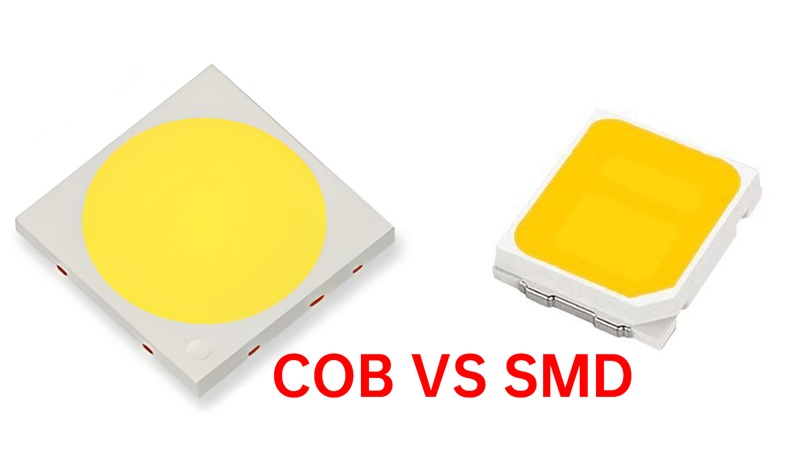
Design and Construction:
Light Output and Quality:
Heat Dissipation:
Energy Efficiency:
Applications:
While both SMD and COB LEDs have their unique advantages and applications, COB LEDs offer several benefits that make them superior in specific contexts. Their higher brightness, uniform light output, and efficient thermal management make COB LEDs an excellent choice for applications requiring intense and consistent lighting. However, for versatile and customizable lighting needs, SMD LEDs remain highly effective.
Ultimately, the choice between COB and SMD LEDs depends on the specific requirements of the application. For high-performance, energy-efficient lighting with minimal glare and superior longevity, COB LEDs are often the better option.
Need professional help? Contact our team for expert support and personalized solutions. We’re here to assist you. Contact Us
PROJECT & OEM ENQUIRIES
Describe the application and the result you need. Our team will review the electrical, optical and mechanical requirements before recommending a product or sample.
Fields marked * are required. Share what is available—we can help clarify the rest.



Mobile:+86 18923408595
Email:info@zbl-lighting.com
Zip Code: 518106
Xinwei Fourth Industrial Zone, Gongming Subdistrict, Guangming District, Shenzhen, Guangdong, China